

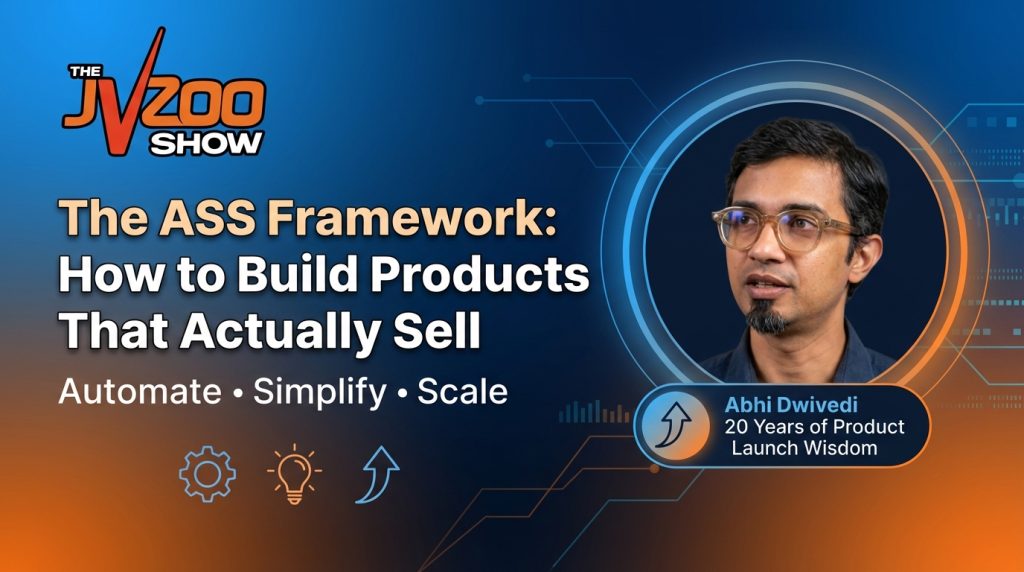
Here’s the harsh truth: most entrepreneurs build products nobody wants. They chase “cool ideas” or copy what seems successful without understanding the fundamental problem they’re supposed to solve. The result? Failed launches, wasted resources, and frustrated customers wondering why they bought something that doesn’t actually help them.
But there’s another way. Take the story of someone who started at 15 with a $17 PDF about CPA marketing on an obscure forum called Digital Point. Fast forward through nearly two decades of product launches, and that same problem-first approach generated $2.5 million from a single product before external forces shut it down.
The difference wasn’t luck or perfect timing. It was following one core principle: solve real problems first, build products second.
Too many creators get this backwards. They fall in love with building “the best AI video creator” when the market is already flooded with free alternatives. They chase what they think is cool instead of what people actually need.
What you’re about to learn isn’t theory. These are battle-tested principles from someone who’s launched dozens of products across nearly two decades – including the ASS Framework (Automate, Simplify, Scale) that filters product ideas, MVP strategies that get you to market faster, and launch systems that have evolved from anxious all-nighters to well-oiled operations.
Whether you’re building info products, software, or services, understanding how to identify and solve genuine market problems is the difference between products that struggle and products that scale.
The ASS Framework – Your Product Idea Filter
Most product failures happen before you write a single line of code or create your first slide. They fail at the idea stage because entrepreneurs fall in love with solutions nobody asked for.
After nearly two decades and millions in product sales, I’ve learned to filter every idea through what I call the ASS Framework: Automate, Simplify, or Scale existing processes. It’s not the prettiest acronym, but it’s saved me from countless dead-end projects.
“You don’t go out there building a company that produces something nobody wants just because you like it,” as the transcript reminds us. Every successful product I’ve launched has passed this three-part test.
Automate: When Manual Processes Need Technology
The automation angle is the most obvious, but also the most misunderstood. It’s not about automating everything – it’s about automating the tedious parts people already do manually.
Take CourseReel, which became one of our top sellers. The market was flooded with course creation tools, but we identified a specific manual process: the hours spent scripting, filming, and editing educational content. CourseReel automated course creation using just keywords and AI, turning a week-long process into a few clicks.
The key insight? People were already creating courses manually. We just removed the friction.
Simplify: Making Complex Tasks Accessible
Sometimes the problem isn’t that a process is manual – it’s that it’s unnecessarily complex. The opportunity lies in taking something that requires expertise and making it accessible to beginners.
Look at emerging platforms like TikTok Shop. When it launched, savvy marketers spotted the opportunity immediately. The process of setting up, optimizing, and managing TikTok Shop listings was complex and intimidating for most business owners. Smart product creators jumped in with tools to simplify product listing, optimization, and visibility.
The winners weren’t building something revolutionary – they were making the complex simple.
Scale: Removing Growth Bottlenecks
The third filter focuses on scaling bottlenecks. What works at a small scale but breaks when people try to grow?
This is where you find some of the most profitable opportunities because people are already succeeding at a small level – they just need help doing more of what works.
The beauty of this framework is it automatically solves the hardest part of marketing: convincing people they have a problem. When you automate, simplify, or scale existing processes, you’re selling to people who are already aware of the problem. That’s infinitely easier than “convincing them that there’s a problem and here’s the solution.”
Before building anything, ask yourself: Does this automate something tedious, simplify something complex, or scale something that works small? If it doesn’t clearly fit one category, you might be building something nobody wants.
Being in the Crowd – Market Research That Actually Works
Most entrepreneurs do market research like they’re watching a football game from the nosebleeds. They study reports, analyze trends from a distance, and wonder why their products miss the mark. But here’s what actually works: “Be in the crowd, right? So instead of you looking at the market from the bird’s eye view, you have to be in the market.”
You need to get your hands dirty. Become your own customer first.
Get Your Feet Wet: Hands-On Market Research
Want to build video marketing tools? Don’t just research the space—go create shorts yourself. Publish them on Instagram and TikTok. Face the same frustrations your potential customers deal with daily. When you’re fighting with editing software at 2 AM or struggling to optimize thumbnails, that’s when real product ideas emerge.
This isn’t theoretical. When you’re actually doing the work, you spot problems that no survey or focus group will reveal. You discover the tiny friction points that make people want to throw their laptop out the window. Those friction points? That’s where million-dollar products live.
Finding Pain Points in Real Time
While most marketers avoid Reddit like it’s radioactive, smart product creators camp out there. “We were looking at places like Reddits where most marketers in our market rarely go and just… reading what the chatter was about, what new tech was coming out and how it can all be used.”
Reddit gives you unfiltered complaints, real problems, and honest feedback about existing solutions. People don’t sugarcoat their frustrations on Reddit. They tell you exactly what sucks about current tools and what they wish existed instead.
New Platform Opportunities (TikTok Shop Case Study)
Staying ahead means experimenting with platforms before they explode. When TikTok Shop launched, most people were still figuring out what it was. But if you were already testing it, creating listings, and experiencing the pain points firsthand, you’d spot immediate opportunities.
Products that help people list items easier, optimize their shops, or get more visibility suddenly make perfect sense. But only if you’ve been there, struggling through the same clunky processes your customers face.
The market will teach you everything—but only if you’re actually in it, not observing from the sidelines.
MVP Mindset – Launch Imperfect, Fix in Motion
Perfect is the Enemy of Profitable
Here’s what most product creators get wrong: they think their product needs to be flawless before anyone sees it. They spend months tweaking features, polishing interfaces, and obsessing over details while their potential customers continue struggling with the problem they could be solving.
As someone who’s launched dozens of products over nearly two decades puts it: “There’s no such thing as perfection. You got to build it, get it out there, and then you fix it on the way.” This isn’t about being sloppy—it’s about understanding that your real education comes from actual users, not internal brainstorming sessions.
The shift from perfectionist to MVP mindset changes everything. Instead of asking “Is this perfect?” you start asking “Does this solve the core problem well enough?” That one question will get your products to market months faster.
Your Beta Group Strategy
Smart product creators don’t launch blind. They build a systematic feedback loop that starts before the public ever sees their product. The process is straightforward: run your idea through a small beta group first, then release the beta version to that same group for real-world testing.
This isn’t about getting your friends to tell you it’s great. Your beta group should include people who actually face the problem you’re solving. They’ll spot issues you never considered and validate whether your solution actually works in practice.
Once you get decent feedback from this group, you’re ready to launch with affiliates and the broader market. The key word is “decent”—not perfect, not unanimous praise, just solid evidence that your product delivers on its core promise.
Post-Launch Optimization
Here’s the counterintuitive truth: you’ll learn more about your product in the first week after launch than in months of pre-launch development. Real customers use your product in ways you never imagined. They break things you thought were bulletproof and find workarounds for features you considered essential.
This is exactly what you want. If something breaks, you fix it on the way. Your launch feedback becomes your product roadmap. Sales data, user reviews, and support tickets tell you what actually matters versus what you thought mattered.
The businesses that scale are the ones that launch imperfect products and iterate based on real market feedback, not the ones that chase perfection in isolation.
Avoiding Founder Blindness – The Third Eye Principle
When Your Baby Has Flaws You Can’t See
There’s a brutal truth every product creator faces: you’re the worst person to evaluate your own creation.
As one successful marketer put it perfectly: “When you build a product yourself, you are a bit possessive about the product and you don’t really see the flaws in it.” It’s your baby. You’ve poured hours, energy, and ego into bringing it to life. Your brain literally filters out problems that would be obvious to fresh eyes.
This isn’t a character flaw—it’s human nature. But it’s also a business killer if you don’t account for it.
The solution? Build what seasoned entrepreneurs call “the third eye” into your process. This means systematically getting outside perspective before you launch, not after your product flops.
What to Get Reviewed (Beyond Just the Product)
Most creators think feedback means “does my product work?” That’s barely scratching the surface.
You need external eyes on four critical elements: the product itself, your marketing messaging, your sales funnel, and your copy. Each one can tank your launch if it’s off, and each one is impossible for you to evaluate objectively.
Your product might solve the problem perfectly, but if your copy doesn’t communicate that clearly, nobody buys. Your copy might be brilliant, but if your funnel has friction points you’ve become blind to, conversions suffer.
Think of it this way: you know exactly how your product should be used because you built it. Your customers don’t have that insider knowledge.
Finding Your Third Eye
The key is finding reviewers who will give you brutal honesty, not polite encouragement.
Start with your beta group, but make sure they understand you want criticism, not cheerleading. Ask specific questions: “Where did you get confused?” “What would stop you from buying this?” “What’s missing?”
For copy and funnel review, consider hiring outside experts who have no emotional investment in your success. Yes, it costs money upfront. But it’s cheaper than launching a flawed product to your entire list.
The goal isn’t to eliminate every flaw—remember, perfectionism kills products. It’s to catch the obvious problems that could sabotage your launch before they do.
The Too-Good-to-Refuse Funnel Philosophy
Here’s the mindset shift that separates products that struggle from products that scale: stop trying to extract maximum profit from every transaction and start obsessing over delivering maximum value.
“When we build the funnel, we want to over deliver and just make an offer that is too good to refuse,” explains someone who’s generated $2.5 million from a single product launch. “We want to make people feel stupid to refuse to buy this kind of offer.”
That’s not hyperbole. It’s strategy.
Front-End Value That Delivers Results
Most entrepreneurs think backwards about funnels. They create a basic front-end offer, then pile on expensive upsells to hit their revenue targets. This approach treats customers like ATMs instead of humans with real problems.
The smarter approach? Pack your front-end with so much value that customers get results before they even consider your upsells. When someone can use your initial product and see tangible improvements in their business or life, they’re not just satisfied customers—they’re believers.
This isn’t about giving everything away for free. It’s about ensuring your entry-level offer solves a meaningful piece of their larger problem. When customers get wins immediately, trust builds naturally. And trust is what converts on the backend.
Upsells That Actually Make Sense
Once you’ve delivered front-end value, your upsells become logical next steps rather than desperate cash grabs. “On the funnel, we try and maximize it, give them additional stuff, more features, language features, and all that stuff.”
Notice the language: additional stuff that enhances what’s already working. Not completely different products. Not solutions to problems they don’t have. Extensions of the value they’re already experiencing.
The best upsells answer this question: “Now that I’m getting results with the core product, what would make those results even better?” Maybe it’s advanced features, done-for-you templates, or premium support. But it all builds on the foundation of proven value.
The Trust-Building Approach to Funnels
Remember that behind every email address in your funnel is “a real human sitting on that laptop, on that mobile phone, reading that email in hopes that possibly this product is the solution they’ve been looking for.”
That perspective changes everything. You’re not optimizing conversion rates—you’re helping people solve problems. You’re not maximizing cart values—you’re building relationships that last beyond a single transaction.
When your funnel operates from this mindset, something interesting happens. Customers don’t just buy—they become advocates. They refer others. They buy your next product without hesitation. They trust your recommendations because you’ve proven you prioritize their success over your profit margins.
The “too good to refuse” philosophy isn’t just about making more sales. It’s about building a business that people actually want to support.
Scaling Beyond Solopreneur – Systems for Growth
From 24/7 Anxiety to Well-Oiled Machine
There’s something almost masochistic about those early solo launch days. Picture this: you’re on the opposite side of the world from your target market, working through the night because your launch is happening during Eastern Standard Time. Every launch was 24/7 anxiety – checking, double-checking, triple-checking that nothing would break when thousands of people hit your sales page.
That was reality for years. One person trying to orchestrate everything from VSL uploads to affiliate communications to payment processing. You’d work through the night, fueled by coffee and pure adrenaline, knowing that one broken link could tank your entire launch.
Now? It’s completely different. There’s a team lead for designing pages and writing sales copy. Another team lead handles JV recruitment and management. The anxiety has been replaced by a well-oiled machine with proper systems and operations. Instead of staying up all night frantically checking links, you get reports from team leads and make go/no-go decisions based on data.
Your Launch Day Checklist
The difference between chaos and calm comes down to systems. Every successful launch needs the same elements checked off: sales pages live, VSLs uploading properly, affiliates equipped with all resources and information. Your email sequences scheduled with no dead links. Webinar ready. Split tests configured. Coupons working.
Build the checklist. Check, check, check. Then it’s just waiting to hit the go-live button.
This systematic approach eliminates the panic. When you have clear processes and designated owners for each function, launch day becomes execution rather than improvisation.
Breaking Through Growth Plateaus
Here’s the challenge most successful product creators eventually face: you hit a plateau with your affiliate network. At some point, you peak. There’s not much growth left in your existing relationships.
Scaling beyond that plateau requires finding newer affiliates, training existing ones more effectively, and building entirely new vehicles for sales. It’s one of the biggest challenges in the affiliate marketing space – but it’s a good problem to have. This plateau only happens when you’ve reached a certain level of success.
The solution isn’t working harder on launches. It’s building systems that work without you.
Frequently Asked Questions
Q: How do I know if my product idea passes the ASS Framework test?
Ask yourself: does this automate something people currently do manually, simplify something complex, or help people scale something that’s working small? If it doesn’t clearly fit one of these three categories, reconsider the idea. As our creator learned over nearly two decades, “You don’t go out there building a company that produces something nobody wants just because you like it.”
Q: What if I’m not currently in the market I want to serve?
Become a customer first. The saying goes “be in the crowd” rather than looking at the market from a bird’s eye view. You have to get your feet wet and see what’s working, what people are actually doing. If you’re targeting video marketers, go create shorts and publish them on Instagram and TikTok. See what challenges you face firsthand – then solve those as problems.
Q: How do I find honest feedback when everyone’s trying to be nice?
Remember that when you build a product, “it’s your baby, so you’re usually so proud of it and you don’t see the flaws in it.” Create specific feedback frameworks and ask targeted questions about particular features or copy elements. Consider hiring outsiders for brutal honesty rather than relying on friends or existing customers. Get third-party reviews on your product, marketing, funnel, and copy – everything.
Q: Should I wait until my product is perfect before launching?
No. Launch when it solves the core problem adequately, even if it’s not polished. “There’s no such thing as perfect time or perfection. You got to build it, get it out there, and then fix it on the way.” You’ll learn more from real customers in one week than from months of internal testing.
Q: How do I avoid “shiny object syndrome” when I see new opportunities?
Set clear criteria for new projects and stick to them. Don’t abandon profitable ventures for unproven ones. As someone juggling seven different products simultaneously puts it: “I’m not sacrificing this one project so I can work on the other one because I’m too good to be working on this one.” Build systems that let you explore opportunities without sacrificing existing success.
Q: What’s the biggest mistake new product creators make?
Building products they think are cool rather than products that solve real problems. Cool doesn’t pay bills – solutions do. Understanding your demographic’s needs and problems, then coming up with unique solutions, is what guarantees product success.
The Human Behind Every Click
The path from $17 PDFs to million-dollar launches isn’t about luck or perfect timing – it’s about consistently solving real problems for real people. The ASS Framework gives you a filter to evaluate ideas before you waste time building. The MVP approach gets you to market feedback faster. The third-eye principle keeps you honest about your product’s real value.
But the deepest insight is remembering the human on the other side of every email, every sales page, every product download. As our creator puts it: “On the other side of that email, there’s a real human sitting on that laptop, on that mobile phone, reading that email in hopes that possibly this product is the solution they’ve been looking for.”
They’re not just metrics. They’re not conversion rates. They’re people hoping your solution will change their situation.
Start with one problem you’ve experienced personally. Apply the ASS Framework. Build an MVP. Get it in front of real users. Fix it based on their feedback. Scale what works.
The market will teach you everything you need to know, but only if you’re in it, experiencing it, solving real problems as they emerge. Your next product launch doesn’t need to be perfect – it just needs to genuinely help people get from where they are to where they want to be.
